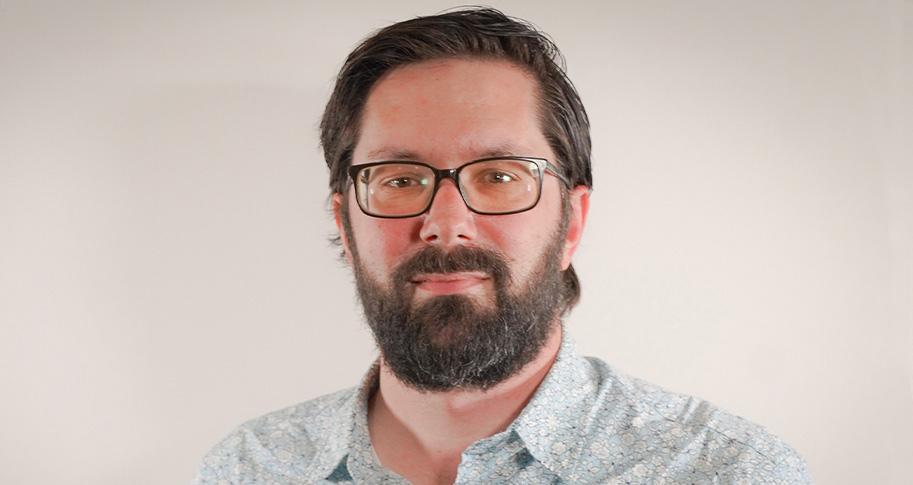


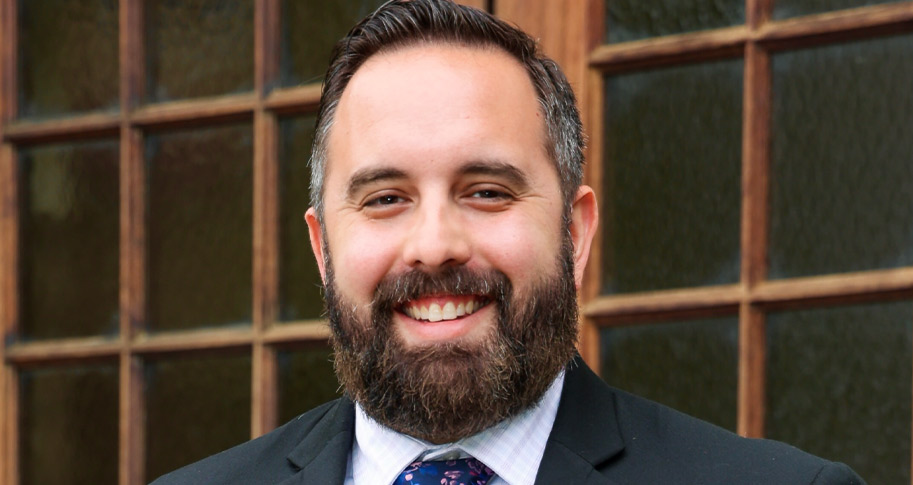
Thomas Burns turned a passion for music into a career in data, discovering along the way how analytical thinking and problem-solving could shape his future.
After graduating in Spring 2025 from the University of Arkansas College of Engineering with a degree in Data Science and a concentration in Cybersecurity Analytics, Burns found his path in technology after initially considering a career in music education. In the full-time Master of Information Systems program, where he was chosen as the 2026 Graduate Outstanding Program Scholar, he built his technical foundation and gained a deeper understanding of how data drives business decisions.
Below, Thomas shares more about his journey, his experience in the program, and his advice for future students.
Did you always plan on a career in technology?
I didn’t always plan on working in technology. Initially, I wanted to be a music teacher. I played saxophone and loved performing. I eventually realized that while I love music, teaching wasn’t what I wanted to do. It took more time than I would like to admit, but I was able to figure out what I actually wanted to do, and that was working with data. I love solving problems and finding patterns and with a career in data, I can do both every day.
What made you choose the full-time Master of Information Systems program?
Even with the technical foundation I built during my undergrad, I knew there was a gap in my understanding of how organizations actually use data to drive decisions. What drew me to the MIS program specifically was its emphasis on connecting technical work to real business value. I wanted to understand not just how to build data systems, but why they matter and how they influence the decisions that organizations make. And choosing Walton specifically was an easy decision. I worked here as a staff member for almost three years before returning to school, and it was the encouragement of my supervisors and colleagues, as well as friends and family, that gave me the confidence to take that leap. Coming back was like coming back home.
What is your current job? How are you applying what you’re learning in the program?
I recently accepted a position as a Geospatial Crime Technician with CAP Index, a company that uses location-based data to help organizations assess crime risk and make smarter security and operational decisions. I am already applying what I learned in this program in a real way: building data pipelines, preparing data for analysis, and helping produce the kind of insights that our clients use to make important business decisions.
What I find most exciting about this work is that we are using data to answer questions that used to rely purely on intuition or guesswork. Physical risk is not something you can easily put a number on, but that is exactly what CAP Index does, and being part of that process is a really meaningful application of everything I have learned. It is one thing to build data systems, it is another to see them help organizations make better decisions about safety and security.
What are your favorite moments or memories from the program?
I think my favorite memories were from the ERP simulation game last summer. Even though our team wasn’t the top performer (though we were number one in our hearts), I had a lot of fun working through fast-paced business scenarios where we had to analyze data, communicate, and make decisions under real time pressure. It was really challenging, but I came away with a much deeper appreciation for how difficult it is to run a business and make good decisions when the stakes are high and the clock is ticking.
As you approach graduation, what advice would you give to prospective or current students?
My biggest piece of advice is to be present and engaged. It can be easy to lean on AI to handle the heavy lifting, and sometimes that is the right call, but there is a lot of value in this program that you can't outsource to a chatbot. The connections you make with your classmates and faculty, the ability to communicate difficult technical ideas clearly, and understanding how technology actually drives business decisions are things that will set you apart in your career. And honestly, I believe these are skills you can’t fully replicate with AI.
How has the program prepared you for future success?
I think what I appreciate most about this program is that it did not just prepare me for my first job out of school. The mix of technical skills and managerial development, things like leading teams, managing projects, and communicating strategically, has really set me up to grow throughout my career. I feel ready to take on whatever comes next.
**
Are you interested in building a career in information systems? Click here for more information about the program, including admission information, application deadlines, and how to schedule a time to talk to an enrollment advisor.