





Master of Science in
Product Innovation

Hybrid flexibility. Hands-on innovation. Real-world impact.


Designed for professionals and aspiring founders ready to turn complex challenges into market-ready products, lead across strategy, design, technology and operations, and move ideas from concept to commercialization. Entrepreneurial by nature. Collaborative by design. Relevant from day one.

What Alumni Say

Jeff Montgomery, MSPI graduate

“The most critical skills I gained while in MSPI were how to use AI to accelerate both the operational management of my company as well as AI for accelerated digital prototyping.”

Jeff Montgomery, '25

Product Manager at Walmart Global Tech · Founder of FireWatchAI

Cameron Mercer, MSPI graduate

“Everybody approaches problems differently, and you learn just as much from your peers as you do from the coursework itself.”

Cameron Mercer, '26

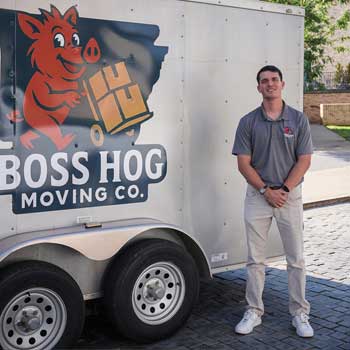
Founder · Boss Hog Moving Co.

Trenton McKenzie, MSPI graduate

“The program goes out of its way to connect students with mentors and business leaders.”

Trenton McKenzie, '26

Forward Deployed Engineer · Overroute

The Walton Advantage

  • Flexible formats designed for working professionals and full-time students
  • Two degree tracks focused on enterprise innovation or new venture development
  • Skills to deliver revenue-generating and cost-cutting advantages from zero to 1
  • Cross-functional expertise spanning strategy, design, technology and operations
  • Applied product development for physical or digital products, services, and systems
  • Entrepreneurial learning at a university ranked No. 20 for graduate entrepreneurship by The Princeton Review
  • Access to industry mentors and Northwest Arkansas’ business ecosystem
  • Collaborative, cohort-based learning with nationally recognized faculty

Career Outcomes & ROI

Where a Walton product innovation master's takes you

Our graduates advance into high-impact roles across product management, innovation, strategy, commercialization and venture development, helping organizations turn complex challenges into market-ready products and solutions.

Master of Science in Product Innovation

Key outcomes

94%

employed within 6 months

$93,500

competition winnings, over 3 years

44%

received a promotion or placement in a new company within 12 months

Top employers

  • Walmart
  • Sam's Club
  • Tyson
  • J.B. Hunt
  • ArcBest
  • Plug and Play
  • SPS Commerce
  • Acres
Just the Facts

Program Length

1-2 Years

The full-time program can be completed in 1 year. The professional part-time program can be completed in less than 2 years.

Application Deadline

International applicants:
February 15
Priority (domestic applicants):
April 15
Final (domestic applicants):
July 1

Total Estimated Cost

$24,506.40

Start Date

Fall

Entrance Test

No Test Required

Financial Assistance

Paying for College

Scholarships, Graduate Assistantships, and Financial Aid.


Curriculum

Courses & program schedule

The Master of Science in Product Innovation degree is offered in a part-time (5 semesters, 6 hours per semester) format or a full-time (1 year, 12 hours per semester) format. Courses are taught through a blended-delivery format with both face-to-face and online components.


Part-time students meet in-person for class one Saturday per month with remote work on the weeks in between. We work hard to create a manageable schedule for busy working professionals returning to school.

Core Curriculum

Fall - Year One

SEVI 52303: Business Foundations for Innovators and Entrepreneurs - Introduction to the fundamental business concepts an entrepreneur needs to know to evaluate and launch a successful new venture. Topic areas include recruitment, selection, motivation and management of employees, market analysis and the marketing mix, financial strategies and accounting for funds, economic considerations, and the management of operations.

ISYS 53203: Development with Digital Innovations - This course exposes graduate business students with the ever evolving environment of modern software development. Using a hands-on approach to exploring modern software development tools and techniques students will learn how to conceptualize, design, and implement software product prototypes using a variety of emerging technologies. Students will gain understanding of how to evaluate digital innovations for inclusion into an ever-evolving software development environment to help accelerate development. Skills will focus on providing students the ability to quickly design and implement functional prototypes for business use-cases while exploring the introduction of innovations in the market.

Spring - Year One

SEVI 52303: Human Centered Design - This course will serve as a highly hands-on experience through the human-centered design process, organized around the following modules: design research, problem identification, concept generation & creativity, prototyping, testing, communication & visualization. Within this course, students have the structure and space to be collaborative, creative, and agile, enabling them to rapidly design viable solutions for their organizational partners.

SEVI 52403: Product Management - This course presents an integrated overview of the field of product management. Through this interactive course, students will be able to take organizational innovation ideas formed in the pre-requisite Human Centered Design course to the next level by learning and implementing the fundamentals of product management which included improving technical acumen, strategy development, business modeling, product market fit, understanding OKR's, EPIC's, and Retrospectives.

Summer - Year One

SEVI 54403: Principles of Product Design & Prototyping - Principles of Product Design and Prototyping develops foundational skills in product design, including hands-on experimentation with digital design and prototyping tools (e.g. Autodesk, Solidworks, Adobe). This course will pair readings, lectures, and hands-on mini-workshops to build confidence and capability in product design in the context of the student' own ideas.

SEVI 58603: Experimental Product Analytics - This course is designed to enhance students' data fluency as related to product testing and development in both the pre-market validation and post-market optimization phases, thereby closing the loop on new product development. The course focuses on A/B design, testing, and data interpretation. It places a strong emphasis on the scientific method of hypothesis testing using artificial intelligence.

Fall - Year Two

SEVI 58803: Venture Creation Lab - This course is the capstone project that equips students with the entrepreneurial skills to develop a new venture. Students have the unique opportunity to build on product ideas developed earlier in the program. Using lean startup methodologies, students will conduct market analyses, develop the product or service offering, and design the business model with cohesive go-to-market and human and financial strategies. The course emphasizes crafting impactful pitches, actionable business plans, and a range of financing methods including bootstrapping, government grants, and more formal investment strategies.

SEVI 54303: Legal, Social, and Economic Context - In this class, we will cover a variety of issues important to product development, including intellectual property and liability issues, industry and competitor analysis, supply chains and sales channels, and social and environmental issues. The course will combine readings guest lectures, and project work that applies concepts to the students' specific projects.

Spring - Year Two

SEVI 58903: Enterprise Innovation Lab - This course is a hands-on, team-based course in which students partner with real companies to tackle complex problems at scale. Each team is assigned a challenge and must identify, size, and prioritize the underlying problem before designing solutions. Guided by faculty experts and industry mentors, students create customized deliverables and project timelines that directly advance sponsor goals. The course emphasizes innovation frameworks, user insights, product roadmaps and cross-functional collaboration to deliver tangible solutions with measurable business impact.

SEVI 58703: Storytelling & Stakeholder Management - This course is a master class on influence and the art of the pitch, to executives and investors. Students will learn communication skills in storytelling, smart brevity, and meaningful metrics and analytics that support decision making. IN addition, students will learn how to create slide decks with high impact visuals. Finally, students will learn interdisciplinary leadership skills and networking that generate buy-in across functions like engineering and design, and a range of other stakeholder groups.

1SEVI 53203 New Venture Development I may be substituted for SEVI 58803 Venture Creation Lab with prior approval.

2SEVI 54103 New Venture Development II may substitute for SEVI 58903 Enterprise Innovation Lab with prior program director approval.


Saturday Class Dates
Fall 2026 Aug 22 · Sept 12 · Oct 3 · Nov 7 · Dec 5
Spring 2027 Jan 23 · Feb 13 · March 13 · April 10 · May 1
Summer 2027 May 22 · June 12 · June 26 · July 24

Full-time students follow a similar format as part-time students but often have elective and capstone courses which meet on weeknights instead of the traditional one Saturday session per month. This compressed course schedule is designed for individuals who are not employed full-time and have greater flexibility in their day and time to devote to a heavier course load.

Core Curriculum

Fall - Year One

SEVI 52103: Business Foundations for Innovators and Entrepreneurs - Introduction to the fundamental business concepts an entrepreneur needs to know to evaluate and launch a successful new venture. Topic areas include recruitment, selection, motivation and management of employees, market analysis and the marketing mix, financial strategies and accounting for funds, economic considerations, and the management of operations.

ISYS 53203: Development with Digital Innovations - This course exposes graduate business students with the ever evolving environment of modern software development. Using a hands-on approach to exploring modern software development tools and techniques students will learn how to conceptualize, design, and implement software product prototypes using a variety of emerging technologies. Students will gain understanding of how to evaluate digital innovations for inclusion into an ever-evolving software development environment to help accelerate development. Skills will focus on providing students the ability to quickly design and implement functional prototypes for business use-cases while exploring the introduction of innovations in the market.

SEVI 53203: New Venture Development I - Focuses on the identification and analysis of new venture opportunities and how entrepreneurs acquire the human and financial resources needed to develop successful businesses. Topics include market analysis, development of products and services, negotiation, developing and executing business plans, and new venture financing. Students are required to complete summer assignments before the course begins in the fall semester.

Spring - Year One

SEVI 52303: Human Centered Design - This course will serve as a highly hands-on experience through the human-centered design process, organized around the following modules: design research, problem identification, concept generation & creativity, prototyping, testing, communication & visualization. Within this course, students have the structure and space to be collaborative, creative, and agile, enabling them to rapidly design viable solutions for their organizational partners.

SEVI 52403: Product Management - This course presents an integrated overview of the field of product management. Through this interactive course, students will be able to take organizational innovation ideas formed in the pre-requisite Human Centered Design course to the next level by learning and implementing the fundamentals of product management which included improving technical acumen, strategy development, business modeling, product market fit, understanding OKR's, EPIC's, and Retrospectives.

SEVI 54103: New Venture Development II - A large-scale, real world, 10 week project involving hands-on work addressing issues faced by managers in partnering firms.

Elective

Summer - Year One

SEVI 54403: Principles of Product Design & Prototyping - Principles of Product Design and Prototyping develops foundational skills in product design, including hands-on experimentation with digital design and prototyping tools (e.g. Autodesk, Solidworks, Adobe). This course will pair readings, lectures, and hands-on mini-workshops to build confidence and capability in product design in the context of the student' own ideas.

SEVI 58603: Experimental Product Analytics - This course is designed to enhance students' data fluency as related to product testing and development in both the pre-market validation and post-market optimization phases, thereby closing the loop on new product development. The course focuses on A/B design, testing, and data interpretation. It places a strong emphasis on the scientific method of hypothesis testing using artificial intelligence.

Elective

Capstone Options

New Venture Development Option – Students may choose a two-semester immersive startup development experience. This pathway consists of taking New Venture Development I in the fall and New Venture Development II in the spring. Students will have the opportunity to more fully develop their venture and compete in a variety of student business plan and business model competitions, nationally and internationally.

Enterprise Innovation Option – Students may choose a two-part immersive startup and enterprise innovation experience. This pathway consists of taking Venture Creation Lab in the fall and Enterprise Innovation Lab in the spring. Through this contrasting experience, students gain the best of both worlds: 1.) the end-to-end skills needed to develop a new venture and deep understanding of the business model to support it in a small, agile environment and 2.) the collaboration and prioritization skills needed to launch new products, services, or systems at scale in a large corporate setting. In Enterprise Innovation Lab, student teams work on a current challenge defined by the industry project sponsor to build, pitch, and present a working product.

The small cohort size of each group enables students to have a high level of engagement with faculty, project sponsors, and industry advisors in both pathways.

Student Experience

How is career development built into the Walton experience?

Career support is an integral component to the Walton student experience.


Personalized career consulting

Personalized career consulting

Personalized career coaching to launch your career or accelerate your next move.

Personalized planning · Industry guidance · Ongoing check-ins

Networking opportunities

Networking opportunities

Direct access to Fortune 500 recruiters and alumni.

Site visits · Industry in classroom · Faculty connections

Pitch competition opportunities

Pitch competition opportunities

Develop, refine and pitch venture ideas on regional and national stages.

Faculty mentorship · Investor feedback · Prize funding opportunities

Alumni network

Alumni network

Leverage the power of the Walton alumni network.

Mixers · Connections · Mentorship

Student Voice & Proof

Inside the Walton experience

Stories and perspectives from students, alumni, and faculty — straight from the program.


News & Noteworthy — Walton News

Walton Graduate Teams Keep Earning Top Honors

Graduate business students from the Sam M. Walton College of Business are gaining national recognition for venture ideas developed in the classroom, earning top placements and prize funding across a series of high-profile pitch competitions this academic year.

06/05/2026 | By Blake Woolsey
Video Playlist

FAQ

Frequently asked questions

Everything you need to know before you apply. Don't see your question? Reach out to the graduate programs office.


The Walton Master of Science in Product Innovation is a 30-credit-hour program with two completion formats:
  • Full-time format: Complete the degree in one year.
  • Professional, part-time format: Complete the degree in five semesters, or less than two years.

Both formats follow a curriculum designed around the product development lifecycle, from identifying opportunities and testing concepts to launching and commercializing solutions.

Yes. The professional, part-time format is designed for working professionals. Students typically take six credit hours per semester, attend class on campus one Saturday per month and complete remote coursework between sessions.

This schedule allows students to continue working while applying product development, innovation and leadership concepts within their organizations.

Students can select the track that most closely aligns with their professional and entrepreneurial goals:
  • Enterprise Innovation: Learn to develop and implement new products, services or systems within established organizations. Students work in teams on current challenges defined by industry project sponsors.
  • New Venture Development: Build and refine a new venture through an immersive, two-semester experience focused on business-model development, validation, commercialization and venture creation.

Both tracks develop the ability to move ideas from early opportunity identification through execution.

The MSPI curriculum develops practical capabilities across the product innovation process, including:
  • Human-centered design
  • Product management and strategy
  • Customer discovery and opportunity identification
  • Business-model design and validation
  • Physical and digital prototyping
  • Experimental product analytics
  • Creative thinking
  • Storytelling and stakeholder management
  • Commercialization and venture development
  • Cross-functional innovation leadership
  • AI and emerging technologies

Students learn to evaluate products and solutions through the connected lenses of desirability, feasibility and viability.

Both. And actually it goes beyond physical or digital. The curriculum prepares students to develop and manage product development for physical or digital products, services, systems, experiences, and workflows. Bottom line is students learn to create value. Whether that’s revenue-generating or cost-cutting in nature. Whether it’s for an external market or an internal customer. Students gain experience with a range of tools and software to develop solutions in many forms and for many industries. Opportunities to innovate are everywhere.

Applied learning is central to the MSPI experience. Students develop concepts, build prototypes, test assumptions, analyze customer and market feedback, and communicate recommendations to stakeholders.

The program culminates in a multi-semester experience through the Enterprise Innovation or New Venture Development track. Depending on the selected track, students may work on an industry-sponsored challenge or develop their own venture.

The MSPI can support careers in product management, innovation, strategy, commercialization, new product development, business development, entrepreneurship and venture creation.

Graduates are prepared to lead cross-functional initiatives, move into more strategic product-focused roles, drive innovation within established organizations or develop their own products and ventures.

The Walton MSPI connects strategy, design, technology and operations through an applied curriculum built around the complete product development lifecycle.

Students benefit from:

  • Two degree tracks aligned with corporate innovation and venture creation
  • Hands-on development across physical and digital products
  • A flexible format for working professionals
  • Small, collaborative cohorts
  • Access to faculty, industry mentors and project sponsors
  • Connections to Northwest Arkansas’ entrepreneurial and Fortune 500 business ecosystem
  • Opportunities to develop products and ventures with real-world relevance

For the 2026-27 academic year, the estimated in-state tuition and fees for the 30-credit-hour program are $24,506.40.

Additional tuition may apply for out-of-state and international students. Tuition and fees are subject to change, and students should also plan for expenses that may not be included in the published estimate, such as course materials, technology, transportation and other personal educational costs.

Students may explore scholarships, graduate assistantships, federal student aid and other university funding opportunities. Because awards and eligibility requirements vary, funding is not guaranteed.

Working professionals are also encouraged to ask their employers about tuition assistance or education benefits. Students seeking federal aid should complete the Free Application for Federal Student Aid and review Walton’s available financial-assistance resources.

No, the GMAT/GRE is no longer required for the Master of Science in Product Innovation program.

Applicants must submit an online application and application fee, along with:
  • Academic transcripts
  • A professional statement of purpose
  • A current résumé
  • Three professional references

Unofficial transcripts may be submitted for the initial application review. Official transcripts are required to finalize admission. Review the complete master’s application requirements before applying.

The MSPI admits a new cohort for the fall semester.

Current application deadlines are:

  • International applicants:February 15
  • Domestic priority deadline:April 15
  • Domestic final deadline:July 1

Prospective students should apply early to allow sufficient time for application review, financial planning and enrollment preparation.