

This article was originally published on LinkedIn.
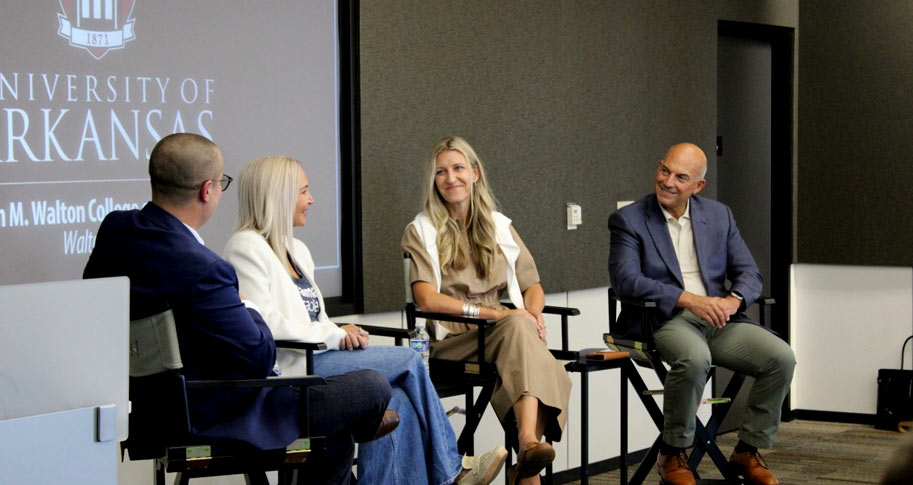
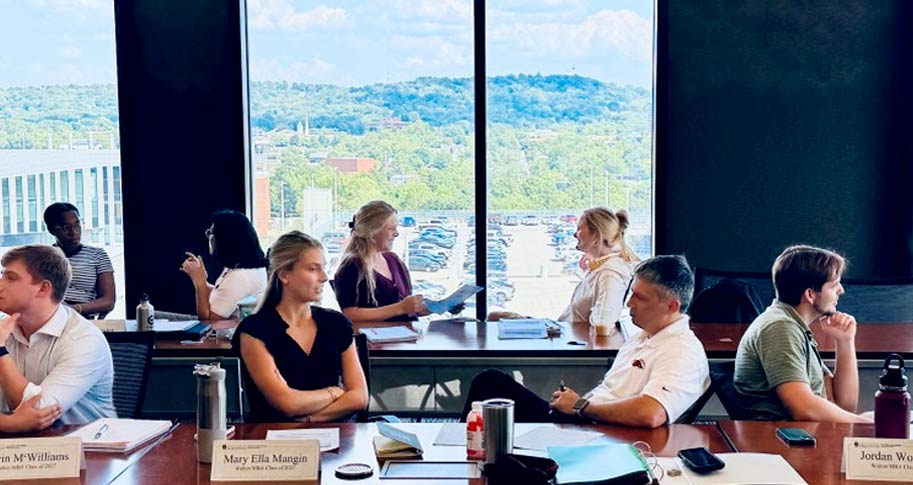
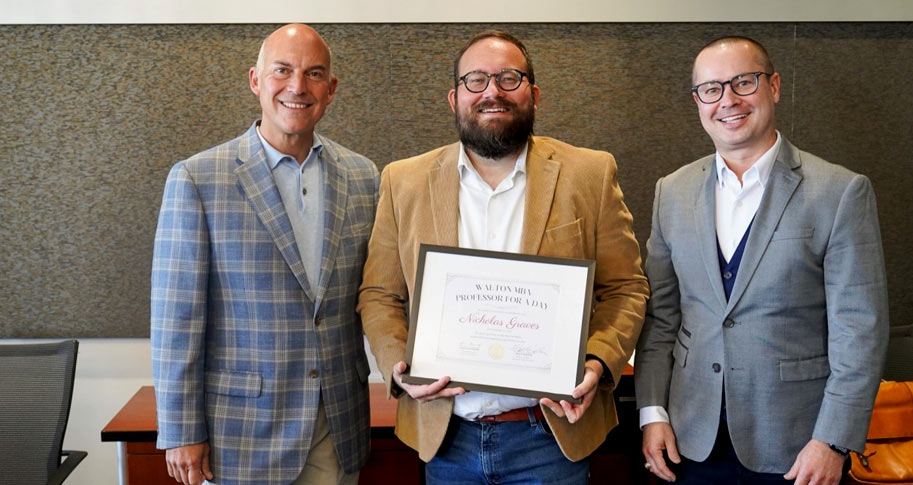
Few people know Sam Walton's story as well as Nicholas Graves, Walmart's historian and archivist. He has conducted more than 200 interviews exploring the company’s history and the people behind it, and he recently returned to the full-time MBA Leadership and Organizational Behavior course that Adam Stoverink, Ph.D., and I co-teach to share new stories with our students. He also brought rarely seen archival pieces with him, including draft material John Huey used to help Sam write Made in America.
This year Nicholas used the archival material to highlight five key leadership lessons he has taken from Sam's life and career.
1. Delegate, and give people a clear vision to work toward
Nicholas said one of the clearest things Sam had, from the very beginning, was a vision: saving people money. In 1962 that idea was expressed as Walmart lowering living costs. By 1992 it had evolved into lowering the cost of living for the world so people could live better, eventually it became the "Save money. Live better." line Walmart uses today.
That clarity of purpose is what made delegation work early on at Walmart. District managers spent Monday through Thursday out in stores, came back on Friday to build strategy together as a group, and brought store managers in for the Saturday morning meeting to discuss it and delegate next steps. Everyone in those rooms was clear on the mission and the vision, so Sam could hand decisions to them and trust the outcome.
2. Involve everyone in the decision-making, no matter the role
Sam believed decisions made with consensus were better decisions, and the company was built around the idea that everyone had a hand in them.
People greeters are a good example. The idea started in a store in Crowley, Louisiana, where a greeter at the door helped prevent theft without making customers feel watched. Sam loved the idea and wanted to put greeters in every store, but not every store manager agreed.
He could have mandated it as the founder, but he knew that it would be less successful that way. Instead, stores were encouraged to try utilizing the new position and report back their results with no pressure. They did and the results were so positive that it slowly spread throughout all the stores organically. Sam ultimately still got the result that he wanted, but the difference in his approach gave decision-making power to the stores so they were more inclined to implement the change.
3. Match your expectations and style to the person
Everyone loved Sam, Nicholas said, but what people loved about him depended on where they sat in the company. Store associates remember a human-centered leader who knew their names, asked about their kids, and wanted their ideas. Executives remember a similar human-centered leader, but also someone who pushed them to achieve more than they thought was possible and who had higher expectations for them to reach loftier goals. Sam adjusted his expectations and his style to the person in front of him.
4. Make room for mavericks
Sam liked mavericks who would push the envelope and even push back on him. He wanted his team to be consistently learning, trying new things, and never getting comfortable in their work or their ideas. To illustrate this, Nicholas shared the story of Tom Seay, one of the first college graduates hired at Walmart's home office. Tom earned his undergraduate degree and his MBA at the University of Arkansas, where he learned regression analysis. At Walmart he was responsible for new store real estate, working with landowners to secure leases. Early on in his role he began asking how the company could select new store locations in an even better way in the future, ideally using data to back the decision. To explore this idea, he ran a regression analysis and built a list of the best potential future locations that were backed by data. He took the list and called a real estate meeting to pitch the idea to Sam.
Sam was not interested. He told Tom he did not need a piece of paper to tell him where to put new stores. He flew his plane over towns, looked at the competitors, the town layout, and the parking lots, and could see what came next.
Tom still had to prepare 15 to 20 stores to open the following year, and he decided to go out on a limb and choose them by utilizing that regression analysis to see if it would work. The stores were extremely successful and later Sam asked him how he had picked such strong locations. Tom told him they came from the list he had turned down. Sam could see when he had been wrong admitted it and praised that maverick behavior from Tom.
5. Build exposure across the business
Sam also believed in exposing people to other parts of the business. Early in the history of the company, he switched the roles of two executives when he thought they were getting too comfortable, David Glass, then CFO and Jack Shewmaker, COO, a move he describes in Made in America. Walmart still moves leaders this way to expose them to different sides of the business, drive new ideas and increase delegation. Leaders who have worked across functions make better decisions, know whose expertise to rely on, and are better prepared to delegate when they are not an expert in a particular area. The goal, Nicholas said, is empowering someone who can lead no matter which functional area they are in.
Nicholas concluded the conversation by sharing his favorite item in the archive, the bill of sale from Sam's first store in Newport, which is now on display in the Walmart Museum. It is a fitting choice. Nearly every story he shared traces back to the purpose Sam carried out of that first store. That purpose gave him the confidence to delegate and a reason to bring everyone into the decisions. It shaped how he led an hourly associate differently from an executive, why he kept listening to the mavericks, and why he wanted leaders who could see every part of the business. Those habits built the world's largest retailer, and they are available to any leader willing to practice them.