This article was originally published on LinkedIn.
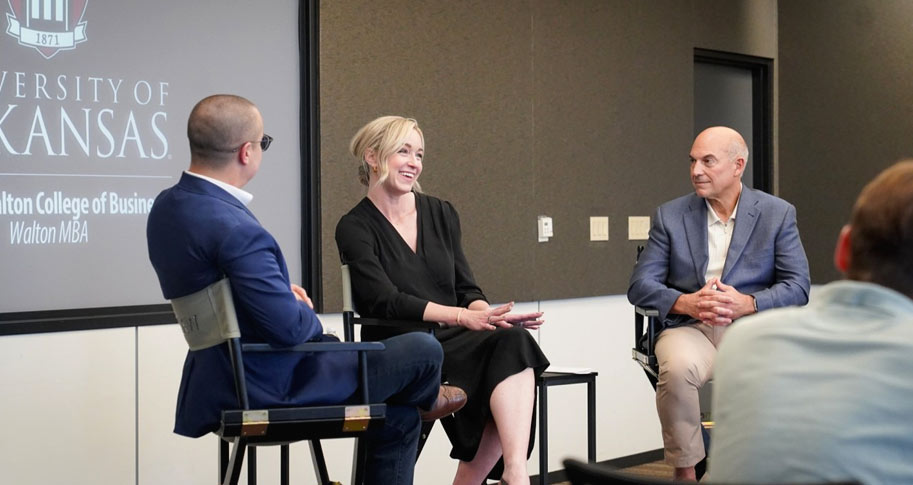
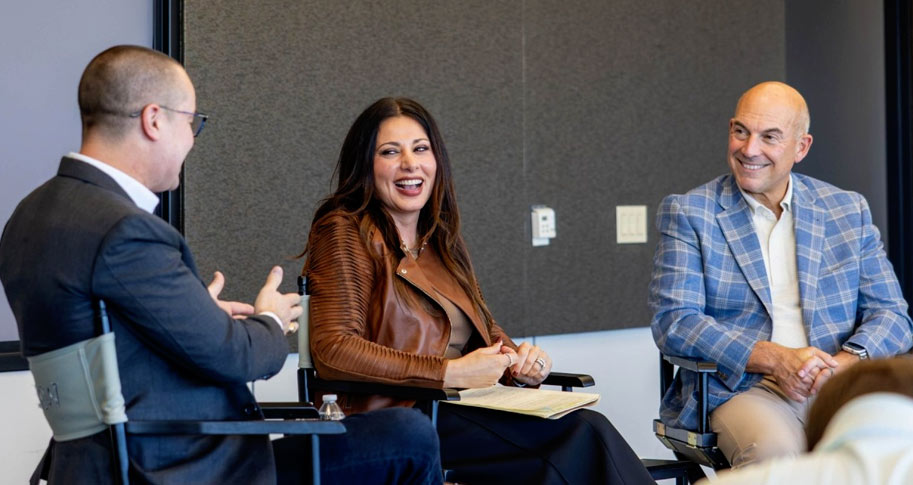
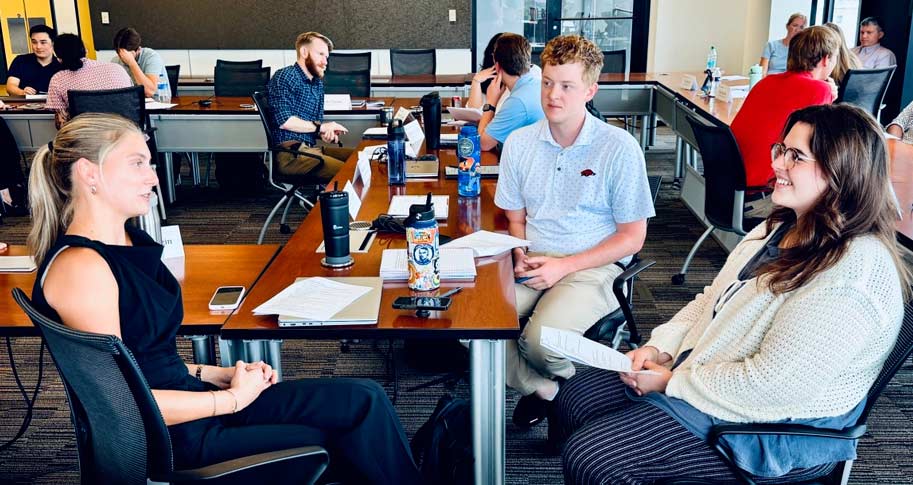
In Week 11 of our Walton MBA - University of Arkansas leadership class, Matt Waller and I asked students to lead a team through two challenging, but very different situations.
First, we traveled back in time to March 2020. A global pandemic was just announced and the office was closing. Everyone would begin working from home tomorrow, and the team chat was filling with questions. Multiple employees’ children were now home from school. Another employee didn’t have the necessary technology. Someone asked whether their jobs were safe.
Then we fast forwarded three years. It’s 2023, and working from home has become an established routine. Leadership just announced a policy requiring three days in the office each week.
Both situations required a change in how people worked. But the employees' concerns in each situation were different, and the leader needed to understand those concerns to respond effectively.
Throughout the session, we kept returning to three questions: What will you do first? What will you focus on? And what exactly will you say in that moment?
That last question pushes you to turn your leadership intentions into actual words.
The pandemic was a crisis scenario. Students had to make decisions with incomplete information. They couldn’t predict how long the office would remain closed or what would happen to the business. They could, however, identify essential work, clarify responsibilities, find out what equipment people needed, and establish when the team would hear from them again.
Our lecture examined four crisis leadership capabilities: sense-making, decisiveness, communication, and empathy. These capabilities all work together. Gathering information helps you decide what to do. Communicating those decisions gives people direction. Understanding their circumstances helps you recognize what they need in that moment.
A manager could say:
“I don’t know yet how long we’ll be working from home. Today, we’ll identify the work that needs to continue and what can wait. And most importantly, I want to hear from you. How are you feeling? What concerns do you have at this point? And how can I help? … I appreciate everyone’s openness today. While I don’t have all the answers, I want you to know that I’m working to get them. Let’s meet again tomorrow morning for an update. Even if there’s no new info, I’d like to check in with everyone.”
The reassurance comes partly from knowing that someone is paying attention and taking responsibility for what happens next.
Gianpiero Petriglieri's “The Psychology Behind Effective Crisis Leadership” describes this as holding: helping people manage distress and make sense of uncertainty.
Institutional holding comes through the organization’s arrangements. People understand priorities, know how decisions will be made, have access to reliable information, and experience fair treatment.
Interpersonal holding comes through attentive relationships. The leader listens to someone’s immediate concerns and helps them work through whatever it is that they’re experiencing.
An employee whose child’s school has closed may need both. A workable schedule provides practical support, while a manager who listens without judgment makes it easier to explain what that schedule needs to accommodate.
This also connects to team resilience. In “The 4 Things Resilient Teams Do,” my coauthors Bradley Kirkman, Sal Mistry, Benson Rosen, and I discuss collective confidence, a shared understanding of teamwork, the ability to improvise, and psychological safety. Importantly, leaders should prioritize building these qualities before an adversity strikes so the team is equipped to respond.
Collective confidence can be strengthened by reminding teams how they overcame past challenges and setting small achievable goals that create new successes together. Dedicating time to discussing one another’s work preferences, styles, strengths, and challenges, along with clarifying roles and responsibilities improves collaboration. Cross-training supports improvisation by helping people understand one another’s expertise, so they can combine their skills in new ways when familiar approaches stop working. Inviting concerns and responding positively builds the psychological safety people need to question a plan, suggest alternatives, and learn from mistakes.
Three years later, our fictional team faced a different leadership challenge. The pandemic was a crisis, which in many ways is an unplanned change. The return to office policy was a planned change.
Taylor, an experienced employee who had met expectations while working from home, now faced a 45-minute commute each way and had a child to pick up from school at 4:30 on most days.
She asked directly:
“I’ve done everything you’ve asked for three years. Why does doing my job well now mean coming into the office?”
To prepare a response, students worked through the Ready, Willing, and Able framework used in ExperiencePoint’s KickstartChange workshop.
‘Ready’ focuses on whether people understand the change and why it is being made.
We asked students to establish a contrast between the current situation and the future the change was intended to create. They imagined the problems that could arise under a work-from-home arrangement, and then described what work could look like if returning to the office successfully addressed those problems.
For example, a team might be losing time because shared projects stall while people wait for answers. Or relationships may be suffering as people have limited opportunities to connect. The desired future would give teammates more time together, which makes work more enjoyable and also helps resolve questions and move work forward more quickly.
The contrast between the present and future states helps frame what the organization hopes the new policy will accomplish.
In an actual change effort, that explanation will need evidence. Identify a problem people can recognize, explain why it deserves attention, and describe the improvement you expect. Then remain willing to examine whether your proposed change is actually producing that improvement.
John Kotter’s “Leading Change: Why Transformation Efforts Fail” emphasizes the importance of urgency and a clear vision. A useful contrast helps employees understand both the reason the current situation is not ideal and the future they are being asked to help create.
While ‘Ready’ largely focuses on the organization’s rationale for implementing the change, ‘Willing’ shifts attention to the employee’s perspective.
Taylor could understand the organization’s reasoning and still have legitimate concerns about the effect on her family. Explaining the rationale again would leave those concerns unresolved.
We asked students to consider what Taylor might lose, what she might gain, what questions they needed to ask her, and how they would acknowledge her concerns.
A possible benefit, such as easier access to colleagues, should be explored with her. Does she experience delays getting answers? Would coordinated office time help? A benefit that sounds appealing to the manager may have little value to the employee, so asking is important.
We also discussed involving Taylor in the planning. The three-day requirement was fixed in the scenario, but the manager had discretion to influence which days the team were in office, how they spent their time together, and the working hours that maintained coverage.
The IKEA effect, studied by Michael Norton, Daniel Mochon, and Dan Ariely, offers a useful connection here. In experiments involving tasks such as assembling boxes and folding origami, people placed greater value on things they successfully helped create.
For leaders, this offers a practical application: give people a meaningful role in building arrangements they will be expected to use.
With Taylor, that could begin with: “What ideas do you have for structuring the days and times so we benefit from the in-office experience and picking up your child is still possible?”
Ask while those decisions are still open, and explain how her input affects the plan.
It’s also important for leaders to be prepared for the possibility that a change doesn’t benefit all employees and in those cases to be fully transparent and empathetic to any ways in which the change has a negative impact. This acknowledgement is more likely to strengthen trust than communicating a perspective that is overly positive and fails to account for the employee’s concerns.
‘Able’ focuses on whether people have the skills and conditions to act.
Sometimes an employee can understand a change and want it to succeed, and still face a barrier that prevents them from actually doing what they’re asked.
Our students identified one barrier and one idea for overcoming it.
For Taylor, a possible barrier was a schedule that required shared work after she needed to leave for school pickup. A useful response would involve agreeing on hours that maintained coverage and placing shared work within those hours (if such a structure was feasible). The manager would need to ask when she had to leave and raise any unresolved needs beyond the team’s authority.
Other barriers of change may require additional training, clearer expectations, different incentives, or access to tools and support. Leaders should diagnose exactly what is missing before choosing the response.
Kotter’s emphasis on removing obstacles is helpful here. A clear explanation of the change needs to be followed by actual decisions that make the new way of working possible.
We closed by asking students to combine each of their Ready, Willing, and Able responses into a single conversation they would have with Taylor. This resulted in a discussion brought together the organization’s reason for changing, the employee’s experience, and a practical next step.
This is valuable practice for all leaders, as change is an inevitable part of leadership. Writing down the actual words we will say to our employees can reveal where our explanations are vague, where we have assumed a benefit that isn’t real, or where we are promising something we can’t deliver.
Before your next change conversation, try describing the current situation and the improvement you want to create. Identify what you need to learn from the person affected, and then consider the barriers they are likely to face. Write all of this down. That preparation can help you begin a conversation with both a plan and an open mind.
This article is part of a series on the fall 2026 Walton MBA Leadership and Organizational Behavior course.