This article was originally published on LinkedIn.
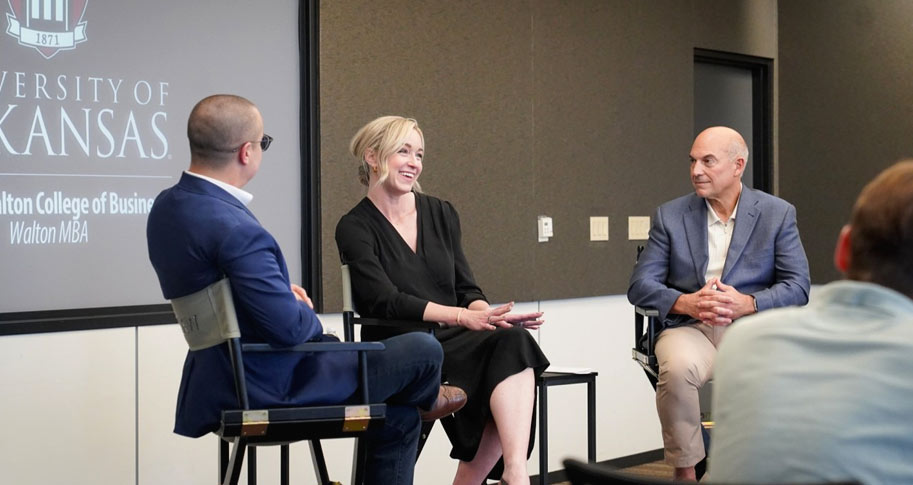
On Oct. 27, Silvia Azrai Kawas, Executive Vice President of Consumables for Walmart U.S., joined the full-time MBA Leadership and Organizational Behavior course that Adam Stoverink, Ph.D., and I co-teach. Silvia earned her MBA at the Walton College in 2002 and has spent nearly 25 years at Walmart, moving from marketing into merchandising. Today she leads the everyday essentials business, from household paper and cleaning to baby, pets, and over-the-counter health and wellness.
When a business like that is disrupted, families feel it quickly. That made her an ideal guest for a week focused on leading through a crisis. Here are a few lessons that I took away from our conversation:
1. Communicate on a set rhythm, especially when the facts are unclear
Silvia described a recent stretch of cost pressure and volatility that carried many of the same characteristics as a crisis. Her team had to protect customers' everyday baskets and keep their trust on both availability and affordability.
She said the first thing that grounds her team in any disruption is the company's purpose of helping people save money and live better. The next step is communication. When information is unclear, she explained, chaos fills the gap. Especially during a time of volatility, she wants every associate to know that their leaders are in the details with them and can connect with them if needed.
2. Decide what you will protect no matter what
I asked how she makes decisions quickly without complete information. Silvia said her team begins by agreeing on what had to be protected. When costs are shifting and the full picture is not yet clear, they ask a simpler question: what can our customers not go without?
That one decision guides everything after it. The non-negotiables become the framework for every tradeoff, give the whole team the same point of view, and keep them from eroding the trust customers had placed in them.
3. Stay a student of the business
Working through the disruption with suppliers taught Silvia and her team a great deal. She learned to dig deeper with partners to understand where raw materials come from and where risk sits. The worst relationship, she said, is a one-sided one. Understanding a portfolio means understanding the supply chain behind it, and that requires a leader to always be a student of the business.
4. Build trust before the pressure arrives
Adam asked how she builds resilience in a team before a crisis occurs. Silvia’s answer was trust, and she said it must be built in ordinary weeks, long before a crisis begins. It starts at the top with psychological safety. People need to know their point of view matters even when she disagrees, that wins will be celebrated, and that losses will be treated as learning.
That foundation is what makes open communication possible when the pressure arrives. The most successful teams, she said, trust one another and know their roles. Her goal is a team that thinks together and acts together.
Taken together, her lessons show that leading people through a crisis draws on the same communication habits, and a leader builds them long before they are needed. A steady cadence keeps people informed when facts are scarce, clear non-negotiables tell them what matters most, and trust built in calmer seasons makes honest conversation possible when the pressure arrives.