Why It Matters?
at the University of Arkansas
In plain terms, forecast what the warfighter needs, plan how to get it there, source the materials, produce the goods, and deliver fuel, ammunition, food, parts, and medical support to the fight, while the enemy tries to break every link in that chain.
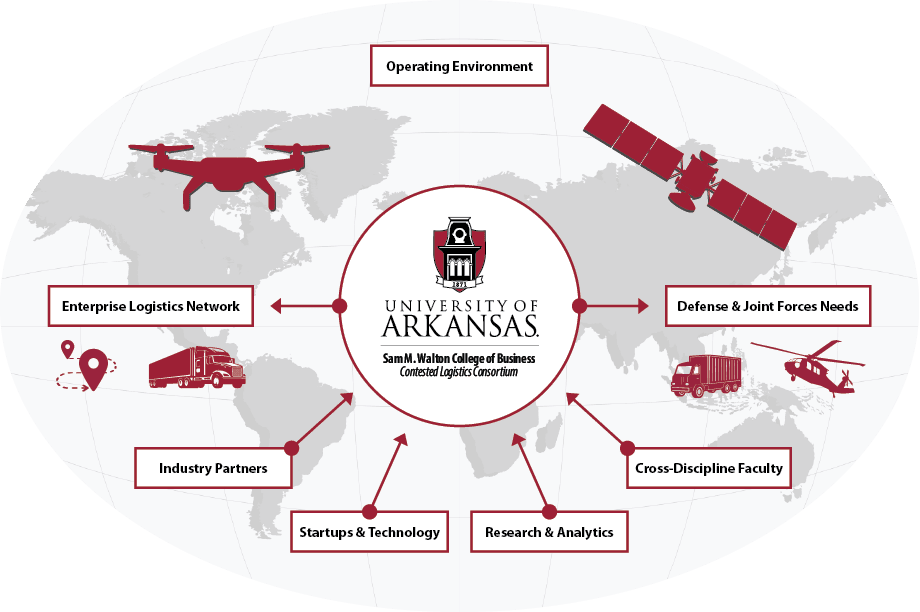
The logistics systems built for permissive environments will not survive contested, multi-domain conflict. The Contested Logistics Consortium exists to help close that gap. We bring together defense practitioners, industry partners, and academic researchers to produce actionable research, develop operationally grounded talent, and build the sustained partnerships the joint force needs. Our work is rooted in one of the nation's leading supply chain programs, embedded in the nation's 'Silicon Valley of logistics,' and aimed at the hardest logistics problems the threats now emerging demand.
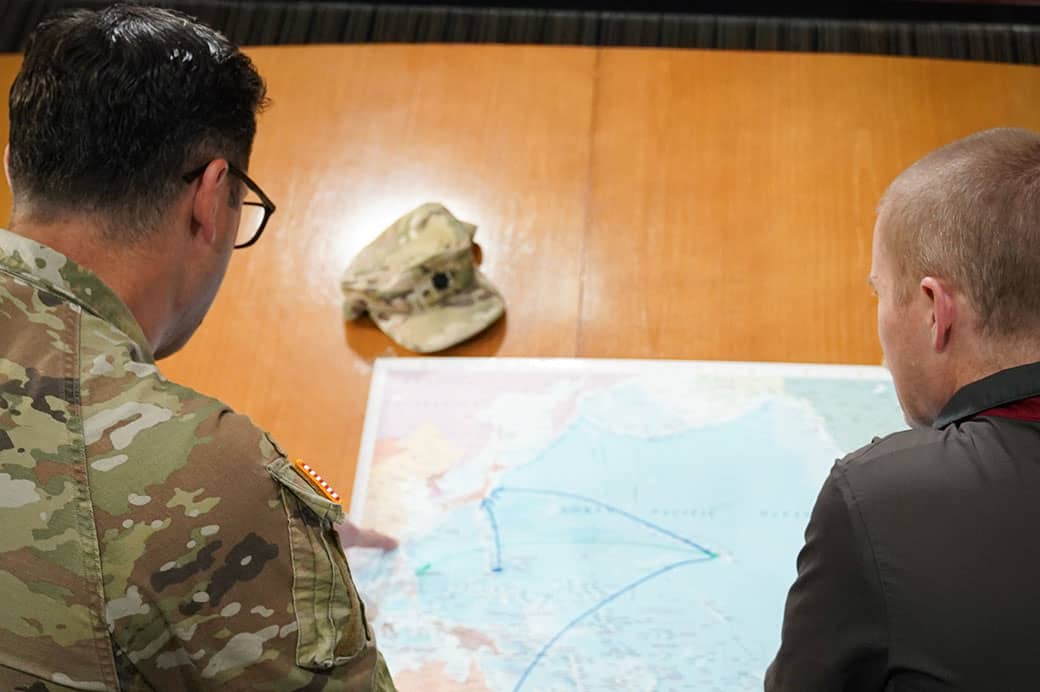
A prototype analytical tool for the United States Army Pacific Command (USARPAC) to identify where to pre-position critical supplies and how to route them when networks degrade. Built by Dr. Rob Curry and LTC Clay Woody in collaboration with the USARPAC’s Chief Data Office (CDO) and G5, West Point's Operations Research Center, and the 8th Theater Sustainment Command (TSC). The underlying models and framework have been validated with operational partners and are now undergoing strategic-level development, testing, and refinement to support future planning use. Read the project spotlight →
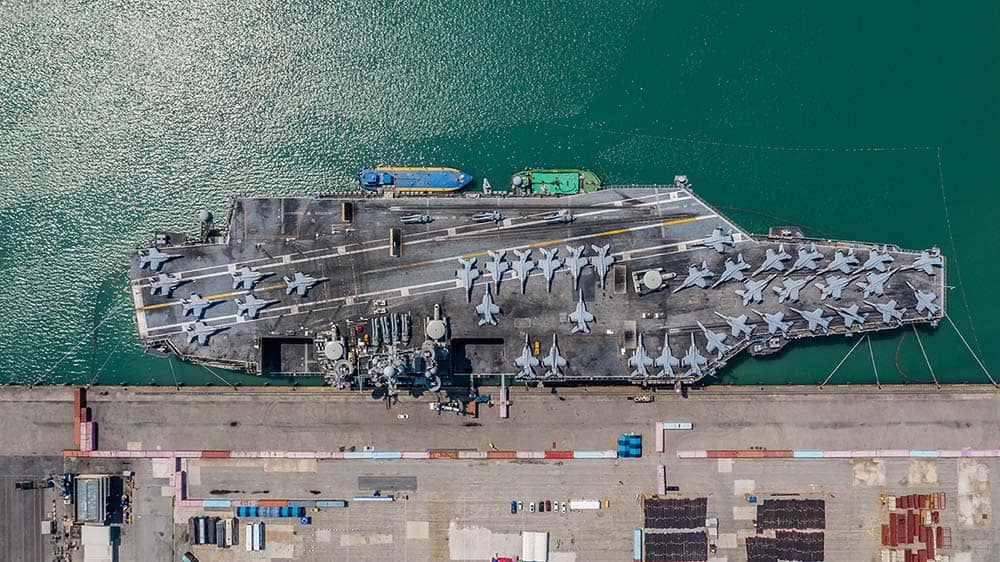
Our Contested Logistics Insights draw on rigorous academic research, commercial supply chain expertise, and original thought leadership to address the operational realities faced by defense leaders. Each piece reframes proven concepts through a contested lens—grounded in real-world challenges and designed to inform more resilient, adaptive decision-making. Together, these insights reinforce the University of Arkansas as a leading voice in contested logistics. Read more articles from our archive HERE.

In terms of the functions of warfare, is logistics a pacing function rather than an enabling function? If so, it changes the order of operations in planning.
06/05/2026 | By Matt Waller
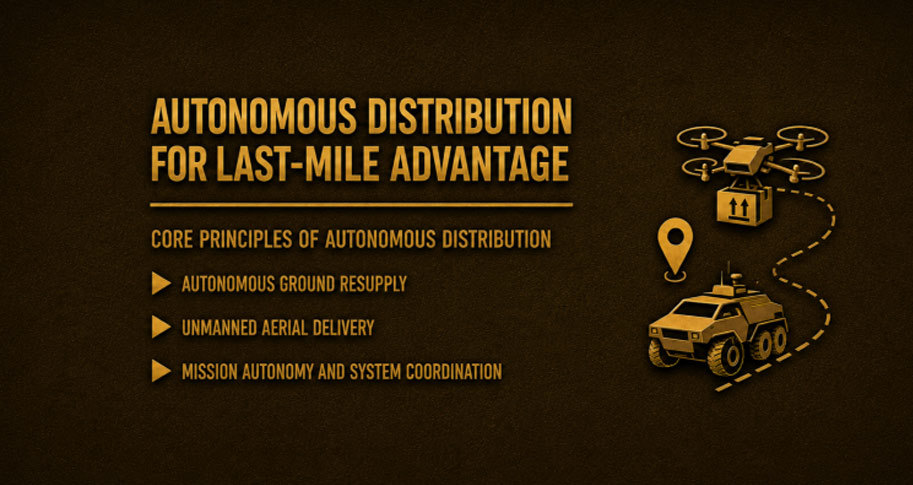
The fourth and final paper in the 2035 vision-back series examines what modernized sustainment must look like and what it takes to get there: AI-driven demand forecasting, real-time asset visibility, and autonomous distribution as the operational layer that brings it all together.
05/27/2026 | By Alex Solis
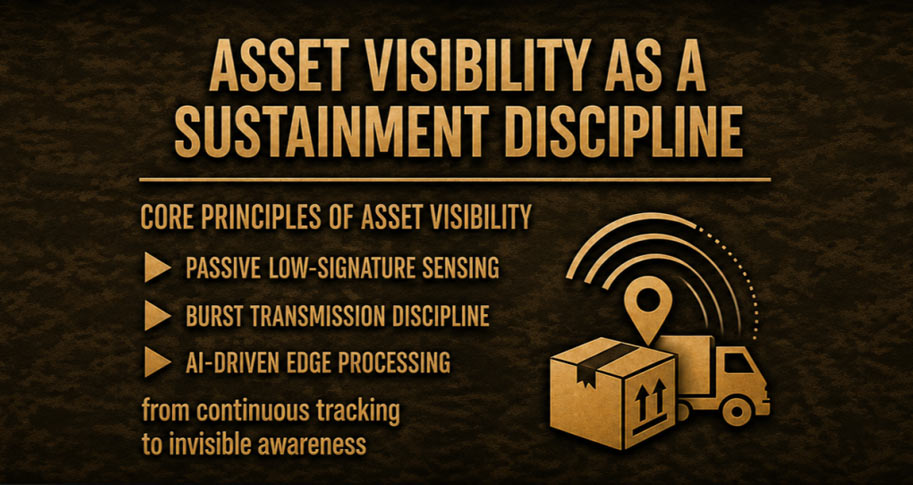
This paper examines asset visibility as a priority domain in contested sustainment, tracing the commercial innovations the Army drew from and the capabilities it built to maintain situational awareness without illuminating itself to the adversary.
05/11/2026 | By Alex Solis
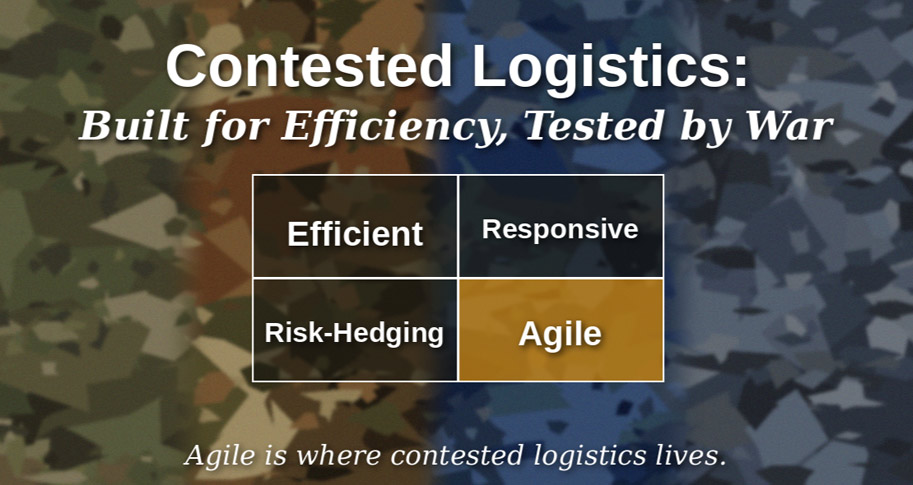
In March 2023, the Marine Corps rewrote its logistics doctrine for the first time in 26 years. Marines must ship and fight at the same time, whether on land, sea, air, space, or cyber. No staging time. No safe ports. The fight has changed. Has the supply chain changed with it?
05/11/2026 | By Brian Fugate

What if winning future wars isn’t about having more supplies, but about rethinking logistics from scratch to outpace and outmaneuver adversaries in a world where supply lines are constantly under attack?
04/30/2026 | By Matt Waller
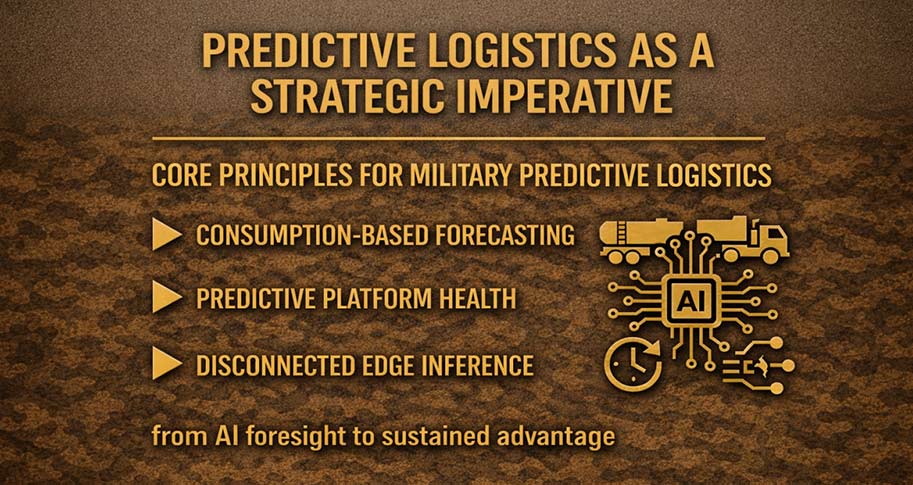
This paper, the second of four, takes a deeper look at predictive logistics, including the commercial models that proved the concept, the Army’s adaptations, and the principles that enable it to operate in contested, degraded, and denied environments.
04/18/2026 | By Alex Solis
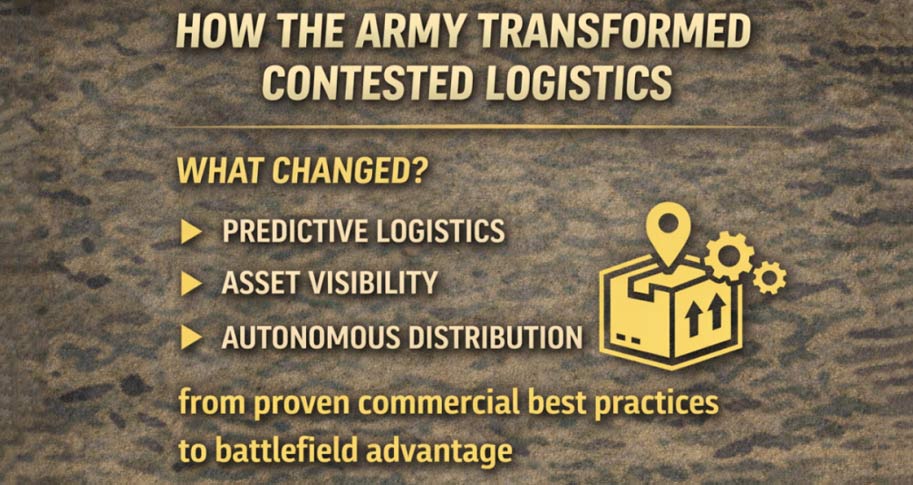
Find out how the U.S. Army is reinventing the way it fights when supply lines are no longer safe, and what cutting-edge innovations are turning logistics from a vulnerability into a battlefield advantage.
03/27/2026 | By Alex Solis
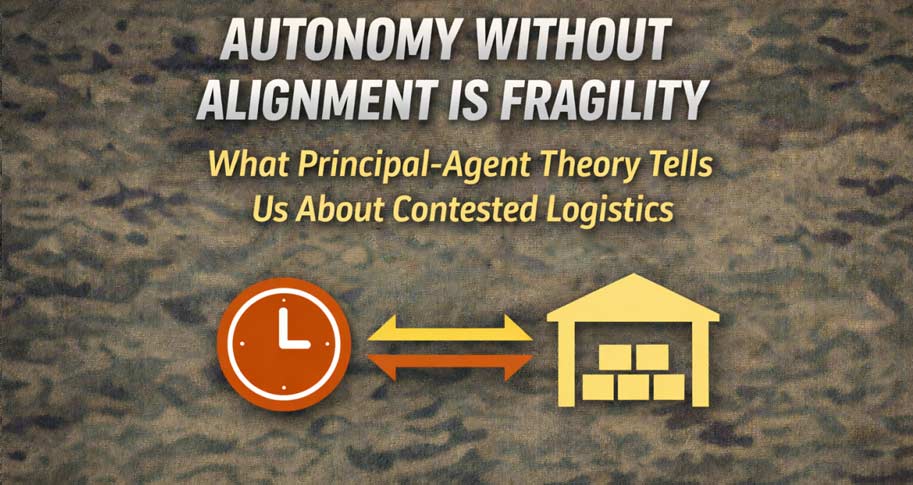
Learn why autonomy alone isn’t enough for military systems to thrive under pressure, and how strong alignment between goals, theory, and execution can make the difference between resilience and fragility in contested environments.
02/27/2026 | By Matt Waller
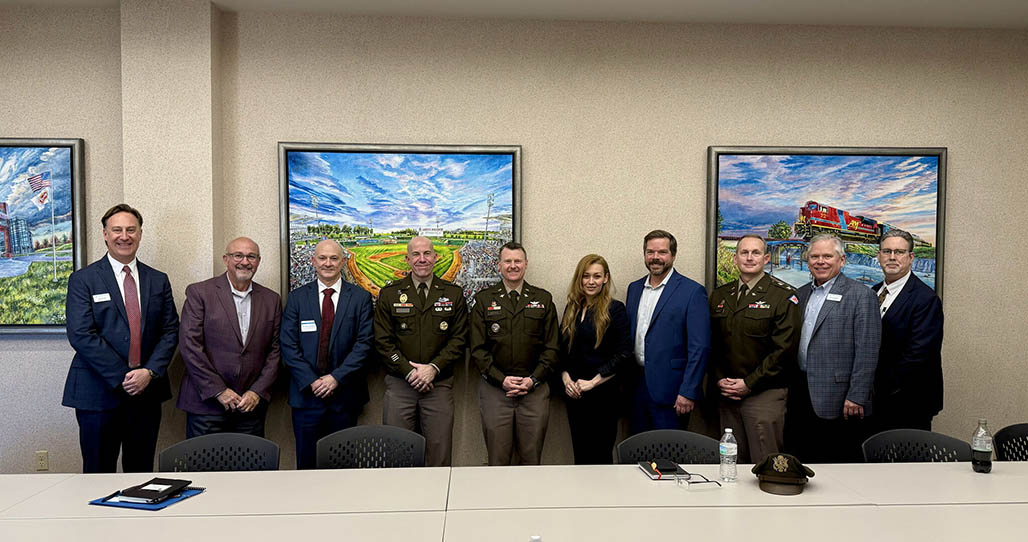
The Contested Logistics Consortium draws on more than 30 faculty across supply chain management, industrial engineering, and information systems at the University of Arkansas. Our researchers span network optimization, reliability engineering, human-machine teaming, cybersecurity, AI-enabled decision support, and transportation resilience, covering the full range of capabilities contested logistics demands, from sustainment modeling to autonomous systems governance.

Brian Fugate, Ph.D.
Professor & Chair, Supply Chain Management
Matt Waller, Ph.D.
Walton College Dean Emeritus
Janeth Gabaldon, Ph.D.
Assistant Professor, Supply Chain Management
Marc Scott, Ph.D.
Associate Chair & Associate Professor, Supply Chain Management
Mauricio Gamez, Ph.D.
Assistant Professor, Supply Chain Management
Rob Curry, Ph.D.
Assistant Professor, Industrial Engineering
Alex Solis
Executive in Residence
Jay Sego
Director of Strategic Initiatives – Supply Chain Management Research Center
Clay Woody
Army Operations Research Officer