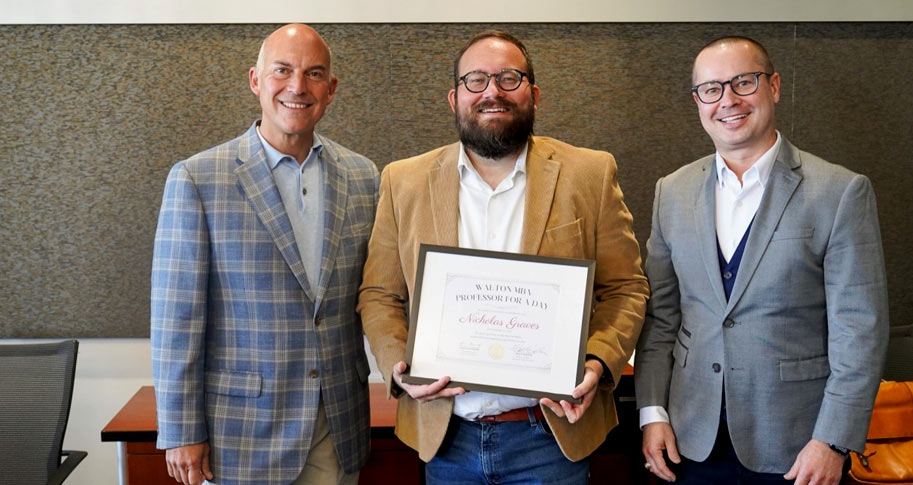


This article was originally published on LinkedIn.
Leadership behaviors are visible. The attributes behind them are not.
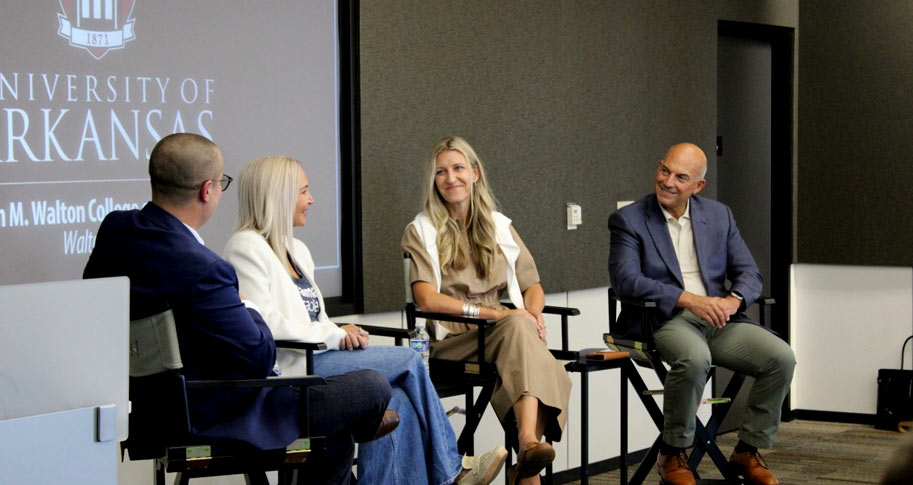
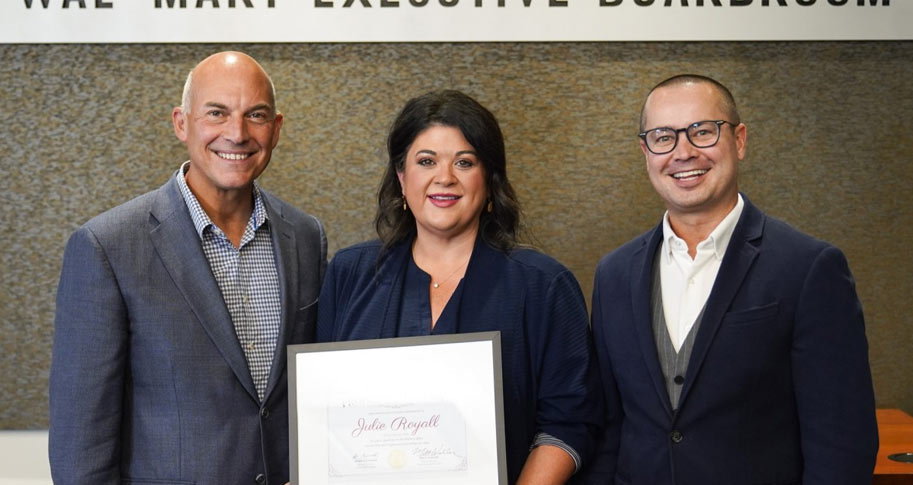
Last week, Adam Stoverink, Ph.D., and I welcomed Julie Royall, a Walmart market manager in Northwest Arkansas, as the first guest speaker of the semester in our Full-Time MBA Leadership and Organizational Behavior class.
This was Julie’s second time speaking with our students, and her message was just as valuable as it was last year.
Our opening session focused on leader attributes. Behaviors are the visible actions a leader repeats, habits that can be taught, practiced, and coached. Attributes sit beneath those actions. They are qualities such as attentiveness, perspective, self-worth, awareness, and humility.
Behaviors can be imitated. Attributes are harder to imitate because they reflect character.
Julie’s five lessons were less about leadership techniques and more about the person a leader must become.
1. Attentiveness
Attentiveness is the willingness to truly see people rather than simply move past them.
Julie shared a story from earlier in her career. During a busy store visit shortly after Doug McMillon became president and CEO of Walmart Inc., he made time to sit down with her and ask what she wanted for her career.
It was a simple question, but it stayed with her because it communicated genuine interest in her future.
That instinct also reflects a practice Sam Walton modeled. He regularly walked through stores with a yellow legal pad, seeking out associates and asking what they were seeing. He wanted to learn directly from the people serving customers every day.
Leaders can shape careers in moments that may feel small to them but are not small to the other person. Attentive leaders notice those moments and use them well.
2. Perspective
Perspective includes the ability to measure impact more broadly than by title, format, or visibility.
Julie described moving from leading Supercenters to leading Neighborhood Markets. The assignment required a different understanding of the business and a different way of thinking about impact. She learned to focus on what the new role could teach her and how she could contribute in a different operating environment.
Career growth does not always look like a larger version of the job you already have. Sometimes growth comes from changing contexts, broadening your understanding, and learning to be effective in a setting that asks something different of you.
If we measure every opportunity by title or perceived prestige, we may miss the assignment that expands our leadership the most.
3. Self-worth
Julie also emphasized the importance of knowing your value and being willing to speak up for yourself.
She described learning not to let uncertainty or frustration accumulate. Instead, she learned to initiate candid, respectful conversations about expectations, contributions, and how to move forward.
That connects directly to Walmart’s core value of Respect the Individual. Respect applies to the people we lead, the people we work with, and ourselves. It includes knowing your value, communicating clearly, and addressing important issues directly and constructively.
Standing up for yourself is not arrogance when it is paired with humility and responsibility.
4. Awareness of impact
Leadership decisions travel. A choice made in one room can affect thousands of associates across many stores.
As a leader’s responsibility grows, so does the reach of that leader’s tone, priorities, and decisions. Leaders can build confidence, create opportunities, and remove obstacles through choices that extend far beyond the people immediately in front of them.
The farther leaders move from the front line, the more intentional they must be about seeking feedback and understanding how their decisions are experienced by the people doing the work.
Julie challenged our students to remain honest about the reach of their decisions and the weight their roles carry.
5. Humility
Julie described leadership as staying close to the work. For her, that means spending time in stores, observing operations, and listening to associates across roles.
She visits backrooms, checks shelves, and talks with associates, including cart attendants, about what they are seeing and experiencing.
Her memorable line was that her real office is her shoes and her car.
The point was simple: if you want to understand the business, go where the work is happening.
This also reflects Sam Walton’s example. His airplane allowed him to visit more stores, walk the floors, and learn directly from associates at every level. Humility means recognizing that valuable insight can come from anyone and then putting yourself in a position to hear it.
What stood out to me was how closely Julie’s five attributes reinforce one another.
Attentiveness helps a leader see people. Perspective helps a leader understand opportunities. Self-worth provides the courage to speak clearly. Awareness creates responsibility. Humility keeps a leader learning.
None of these attributes is flashy, but all five compound over time.
A title can give someone authority. These attributes determine how that authority is used and whether others experience it as leadership.