

This article was originally published on LinkedIn.
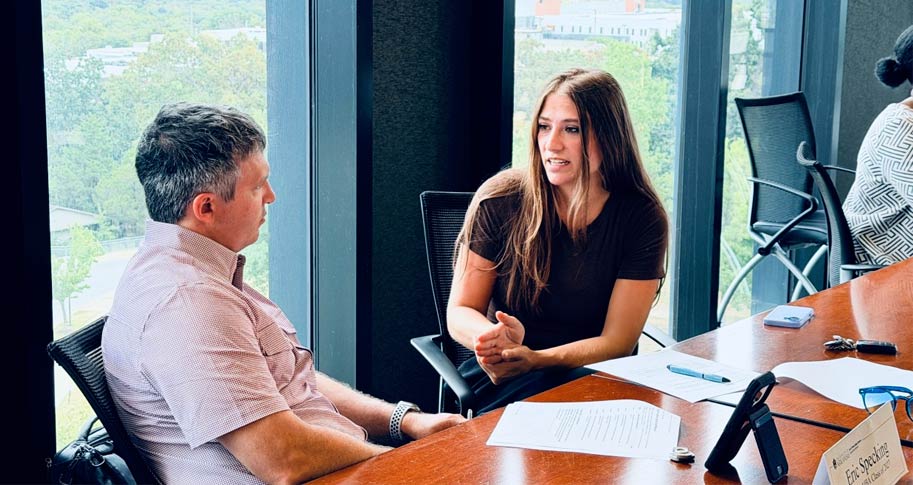
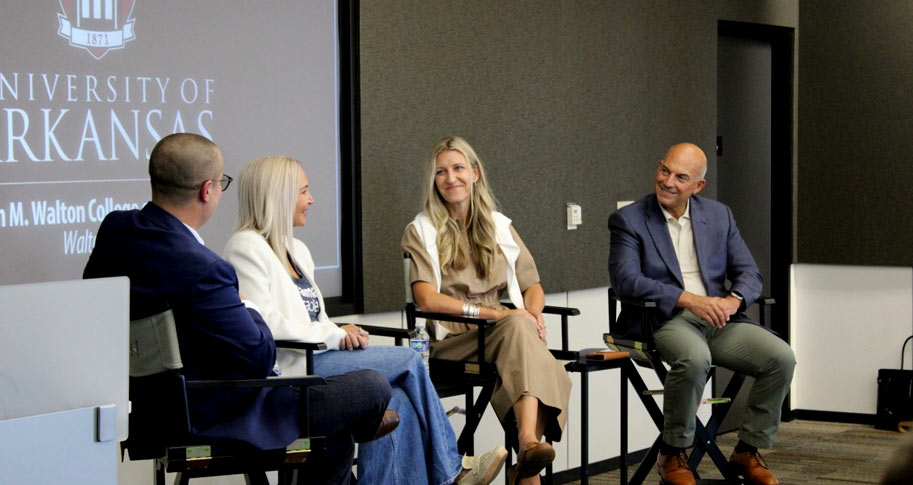
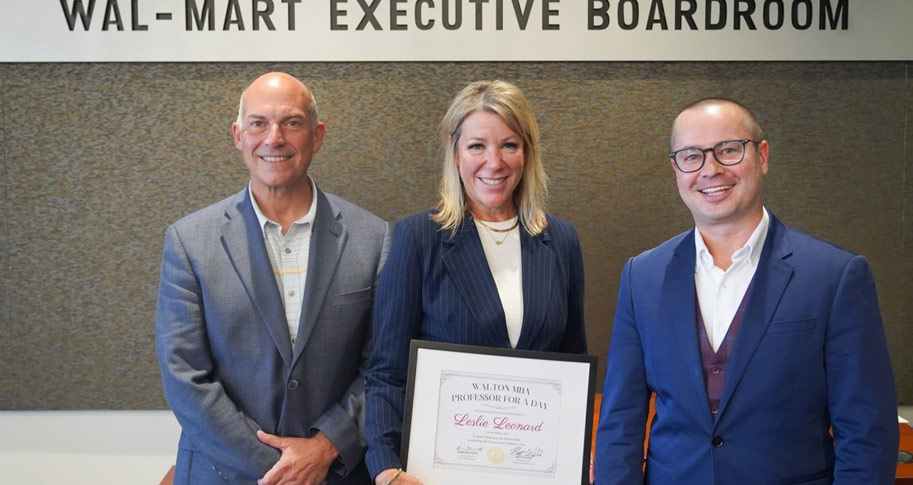
Leslie Leonard had been in her new role for about a week when she joined our full-time MBA Leadership and Organizational Behavior class recently. Previously Senior Vice President of Personal Care and Beauty for Walmart U.S., Leslie recently stepped into a new role as Senior Vice President of Merchandising Enablement. Her teams are focused on improving inventory flow, localizing assortments to the right stores and spaces, and using technology, AI and analytics to better enable merchants and move faster and smarter. Her remit also includes helping reimagine the store of the future—creating a more inspiring, elevated customer experience while simplifying execution for associates.
Adam Stoverink, Ph.D., and I asked her about the leaders who shaped her and how she leads today, and her answers kept returning to a few lessons she has carried throughout her career.
1. Set the tone, especially when things go wrong
Leslie described a situation early in one of her roles when her business was under enormous pressure and the usual options for fixing it were not possible. What she remembers most is how the senior leaders above her responded. Neither was an expert in her part of the business, and rather than asking what she was doing about it, they asked what support she needed from them.
That difference in tone stayed with her. A leader sets the tone for how a team experiences a challenge, and the first question a leader asks tells people whether they are being judged or supported. When something goes wrong on her own team today, Leslie thinks back to that moment and starts by offering support and guidance rather than judgement.
2. Share where you are going, why, and gather feedback from your team before you go
Leslie's Hogan Assessment describes her as an energizing catalyst, high in energy, connection, standards, and action. She sees opportunities quickly, and can formulate an action plan fast. Early in her career she would set a direction and go. The risk, she said, is that if your team is not "on the bus, you can run them over."
That had to change when she moved from leading individual contributors to leading leaders and her role became one of influence. Early on, a team member told her she was not giving her team the ability to help shape the path, and she said that feedback materially changed her leadership approach.
Now she starts by sharing where she is going and why. Then she gives the team the space to share their open and honest feedback and then collaboratively drafts the path to get there. That creates buy-in and gives her team a real voice in both the destination and the route.
3. Ask the questions you cannot answer
When asked how she creates an environment where people will tell her the truth, Leslie pointed to having two ears and one mouth. For her, that means listening more than talking and being comfortable not having all the answers. It means asking good questions, including asking where her own blind spots are. You do not need to know everything; she told our students. You just need to know who does have the answer, and often the best ideas come from those closest to the work.
That mindset has served her well as she moved between categories and roles throughout her career. Each new business puts her back in a learning state where humility and good questions matter most. It is also why curiosity is the quality she values most when hiring and promoting, if it comes with listening closely to the answers.
4. Invest in the people coming up behind you
Leslie credits leaders who stretched her before she knew she was ready. One of her former leaders encouraged her to color outside the lines and think unconstrained. At Kohl's, where she was vice president and divisional planning manager for juniors and girls, her merchandising partner, an industry legend, gave her the chance to co-create, socialize and present the division long-range strategy to the executive team, something usually reserved for the merchant. That kind of investment, she said, puts the wind in someone's sails.
She has tried to do the same. When a high-potential leader on her team was working on his business model and long-rang plan, she made it a safe space, asked for progress rather than perfection and supported him while stretching him into new capabilities. Over the past year, he has grown into a transformational thinker.
Leslie told our students she has learned as much from great leaders as those who fell short. The great ones, in her experience, set the right tone when things were hard, brought their teams in instead of handing it down, and were humble enough to ask questions they could not answer. Those are habits our students can start building now, long before anyone hands them a large team.