This article was originally published on LinkedIn.
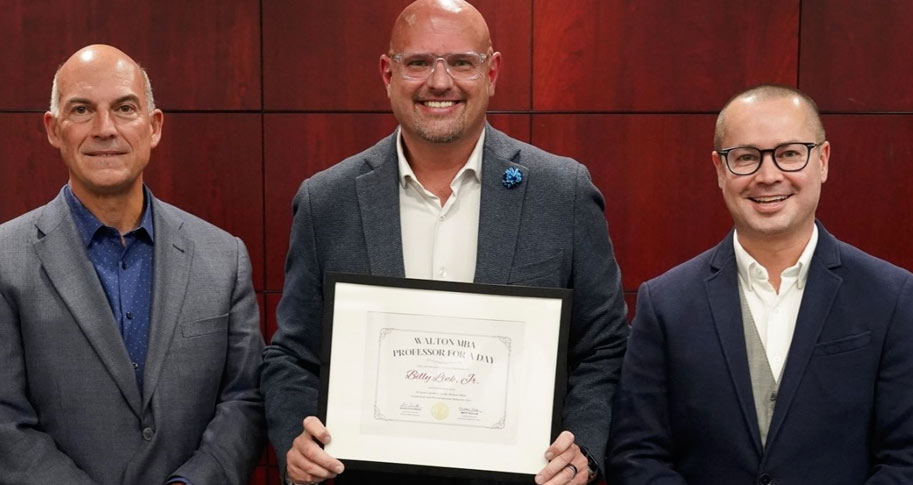
Billy Link Jr. never expected that his college job at a Sam's Club near campus would lead to a fulfilling career. Today he is Vice President and Regional General Manager for Neighborhood Markets in the West U.S, at Walmart, and as he put it, he has been able to change his career many times without ever changing his name badge.
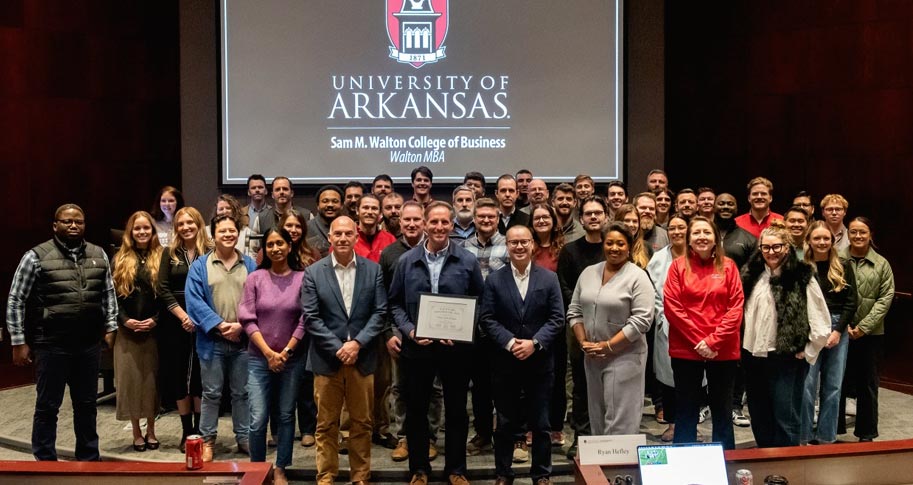
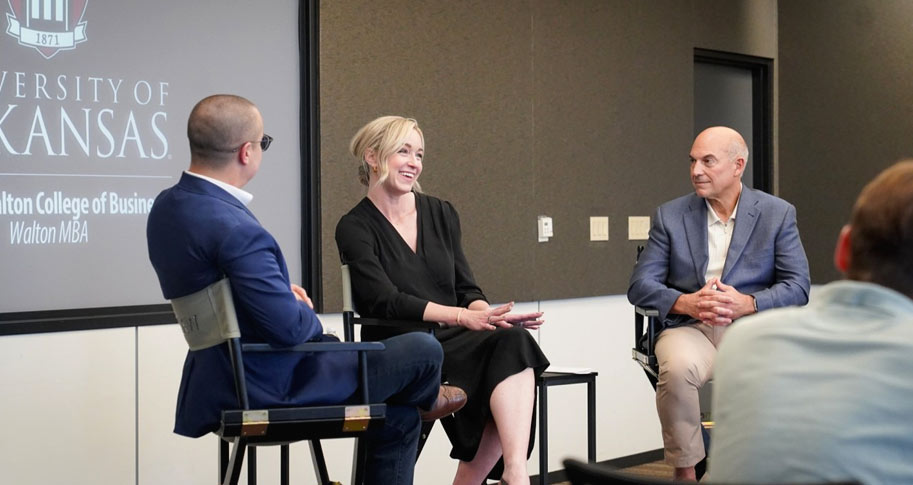
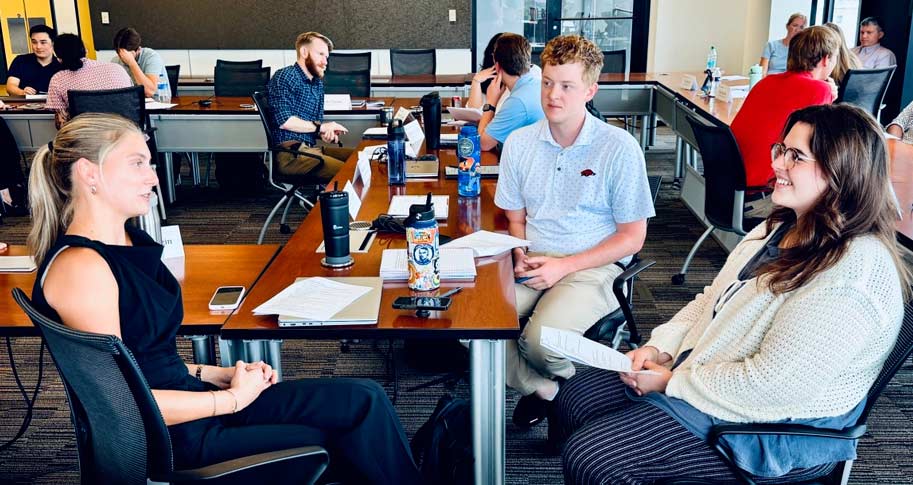
Billy joined the full-time MBA Leadership and Organizational Behavior class that Adam Stoverink, Ph.D., and I co-teach for our session on charismatic leadership. He shared a few lessons with our students on how to become a more charismatic leader.
1. Charisma can be learned
Some people believe charismatic leaders are born that way, but research suggests the skills behind charisma can be developed. When I asked Billy whether his own charisma came naturally or was developed, he said it was developed. He was not always the leader he is today, and he believes charisma can absolutely be learned.
He also pointed out that charisma has limits when it depends on one person. In a single store, a leader can connect with nearly everyone face to face. Across a large organization, that is no longer possible. As responsibilities grow, he said, leadership becomes less about what you personally accomplish and more about what you enable others to accomplish. In his view, one of the greatest measures of a leader is the people they develop to lead after them.
2. Lead with the why
Billy believes the most effective leaders help their teams understand why the work matters, not only what needs to be done. In his experience, most people can describe what they do, a smaller group can explain how they do it, and fewer still can explain why. When people understand the why, they can work out the how and the what on their own, and they are far more motivated to do the work well. His goal is to build leaders who understand the purpose behind the work, not people who simply carry out instructions.
Adam asked which tools Billy relies on most to communicate that purpose. His answer was teachable points of view, built from real experience. A story drawn from something a leader has lived through carries more weight than any directive. That is also why he encourages leaders to keep reflecting on their own decisions: Was it the right call? Would I make it again, and why? Those reflections become the stories that will one day help someone else.
3. Set big goals your team can believe in
I asked Billy about two components of charismatic leadership: reflecting the sentiment of the group and having the confidence to pursue ambitious goals. He said the two have to work together. If the people closest to the work do not believe a goal is achievable, setting it anyway will not build their confidence, and it can erode their trust in the leader.
When a goal is in doubt, his approach is to pause, listen to the team, and then work through the facts together. As he told our students, facts do not have feelings. Grounding the conversation in facts, while listening to the team’s perspectives, helps build a shared understanding of what it will take to reach an ambitious goal.
4. Do not let charisma quiet the room
One of our readings this week, When Charismatic Leadership Goes Too Far, warns that a leader's charisma can become a liability when people are afraid to challenge them. The more confident and compelling a leader is, the easier it becomes for a team to simply go along. That risk grows as a leader moves up and it gets harder to hear about problems firsthand.
I asked Billy how he guards against it. His answer was to keep truth tellers close at every level, from hourly associates to executives. They are people who want what is best for the organization and will tell him when something is wrong or an idea is not a good one. A leader is never perfect, he said, and the best ones lead in a way that invites people to say so.
5. Help people see the need for change
One of the strengths of a charismatic leader is the ability to help people see that a change is needed before it happens, so they are ready to commit to it. I asked Billy about a time he had to do that.
He described a period when customer expectations shifted faster than anyone had planned for, and his team needed to change how it worked to keep up. Rather than announcing a new direction, he went to the teams doing the work, shared what the numbers were showing, and asked what they would change if they were building around the new reality. They had plenty of ideas. He talked with the people affected, connected every decision back to serving customers, and brought the team together around a shared vision of where the business was going and how they could own it.
The way a team works can change, he said, but who it serves should not. Keeping that at the center gave people a reason to believe in the change rather than simply accept it.
Adam closed by asking Billy what advice he would give students who want to become more charismatic leaders. He started with self-governance. Leadership starts with leading yourself, he said, and while we cannot always control our circumstances, we can control our preparation, our response, and the standards we hold ourselves to. He also encouraged them to know their strengths, be true to themselves, and not spend so much time on their weaknesses that they lose sight of what they do well. There are only two people you have to make proud, he said: the eight-year-old you and the eighty-year-old you.
Billy's own path shows what that looks like in practice. The charisma our students saw in him was not handed to him. He built it by reflecting on his own decisions, explaining the why behind the work, and inviting his teams to tell him when he is wrong. Those are habits any leader can develop, and they start with being clear about why the work matters.